In short
- With Claude, I built the apps I use every day, for my tasks, my clients, the money of the house and my voice. Anyone can do this now.
- The technical part got lighter, so the hours go to talking with the client, sometimes two, sometimes six, before any design exists.
- AI builds, and a lot of my work is deciding what stays, and taking away what nobody asked for.
Everything is easier now
I wanted something like Asana and Notion in one place, and some of the features I used most, like tags, were paid. So I built my own app, and called it Tecela.
In it I see my tasks for today, tomorrow and the days after, in a calendar, with a one or three month view that shows the start and end of every project I’m working on. It also has my clients, what I earn per month on average, and how much of it comes from building sites and how much from maintenance. The money of the house, what we spend and what we put aside to grow, lives in a second app, Pataca, all of it in charts.
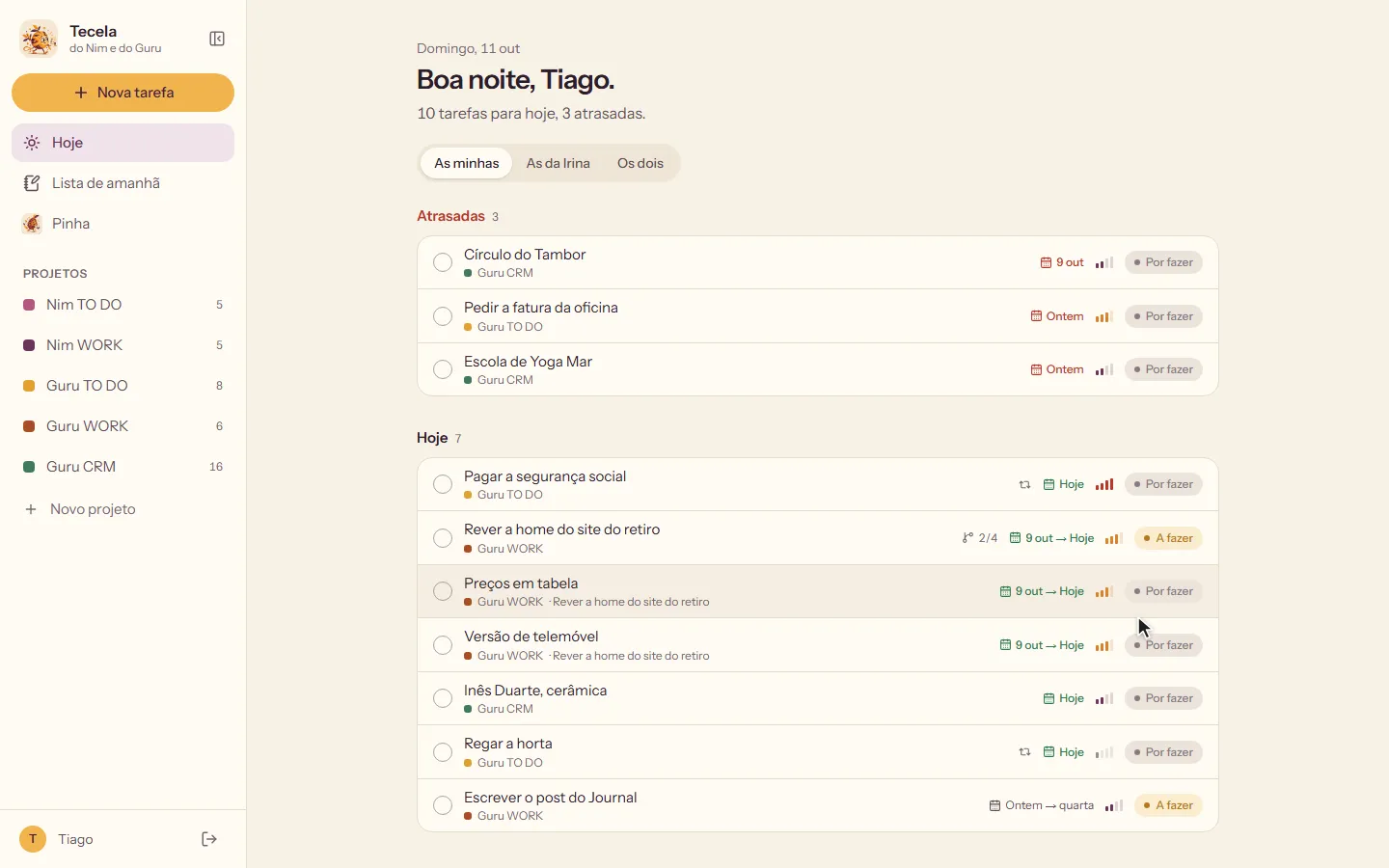 TecelaTasks, the calendar and my clientsIn place of Asana and Notion
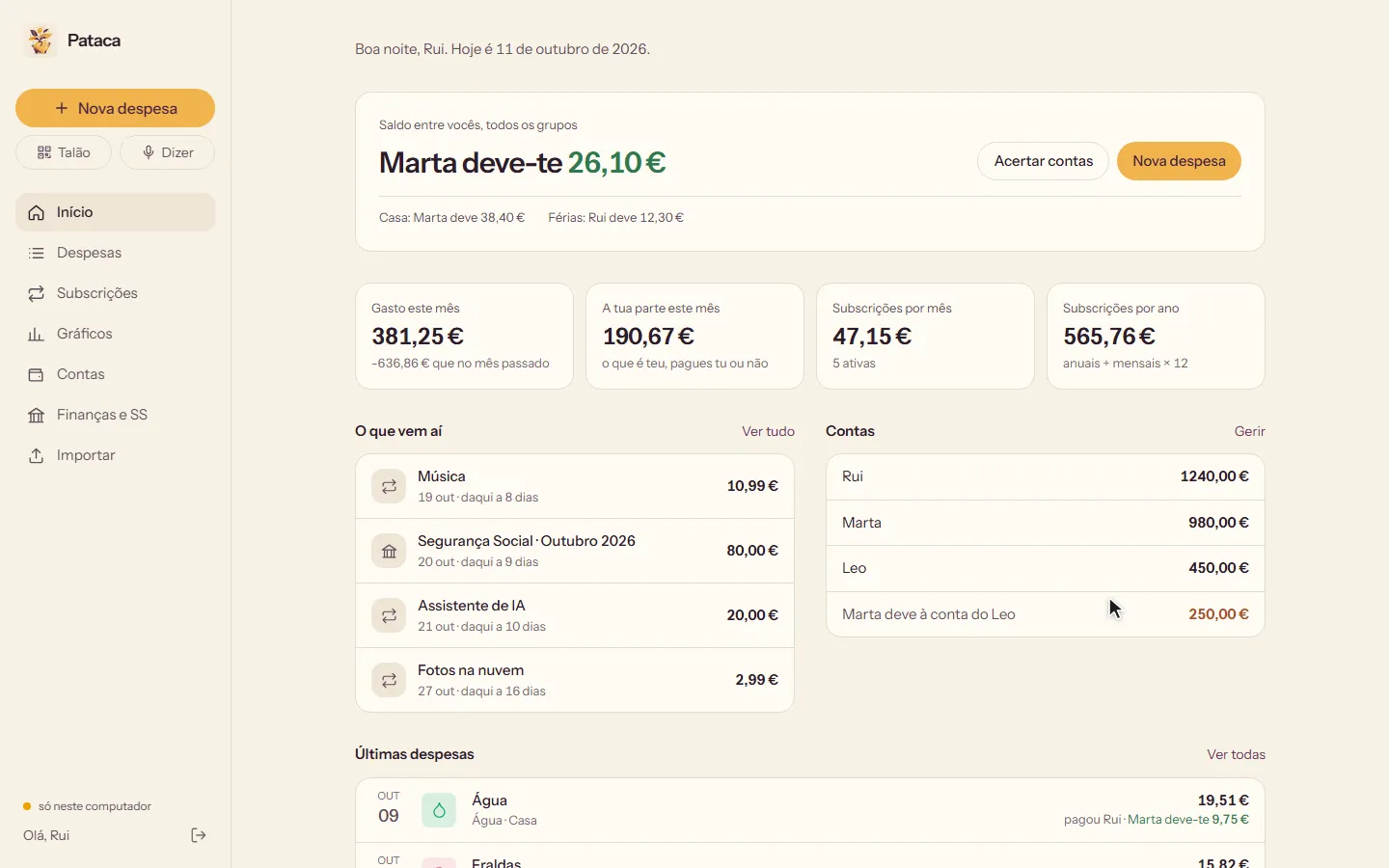 PatacaThe money of the houseIn place of Splitwise and SUMA
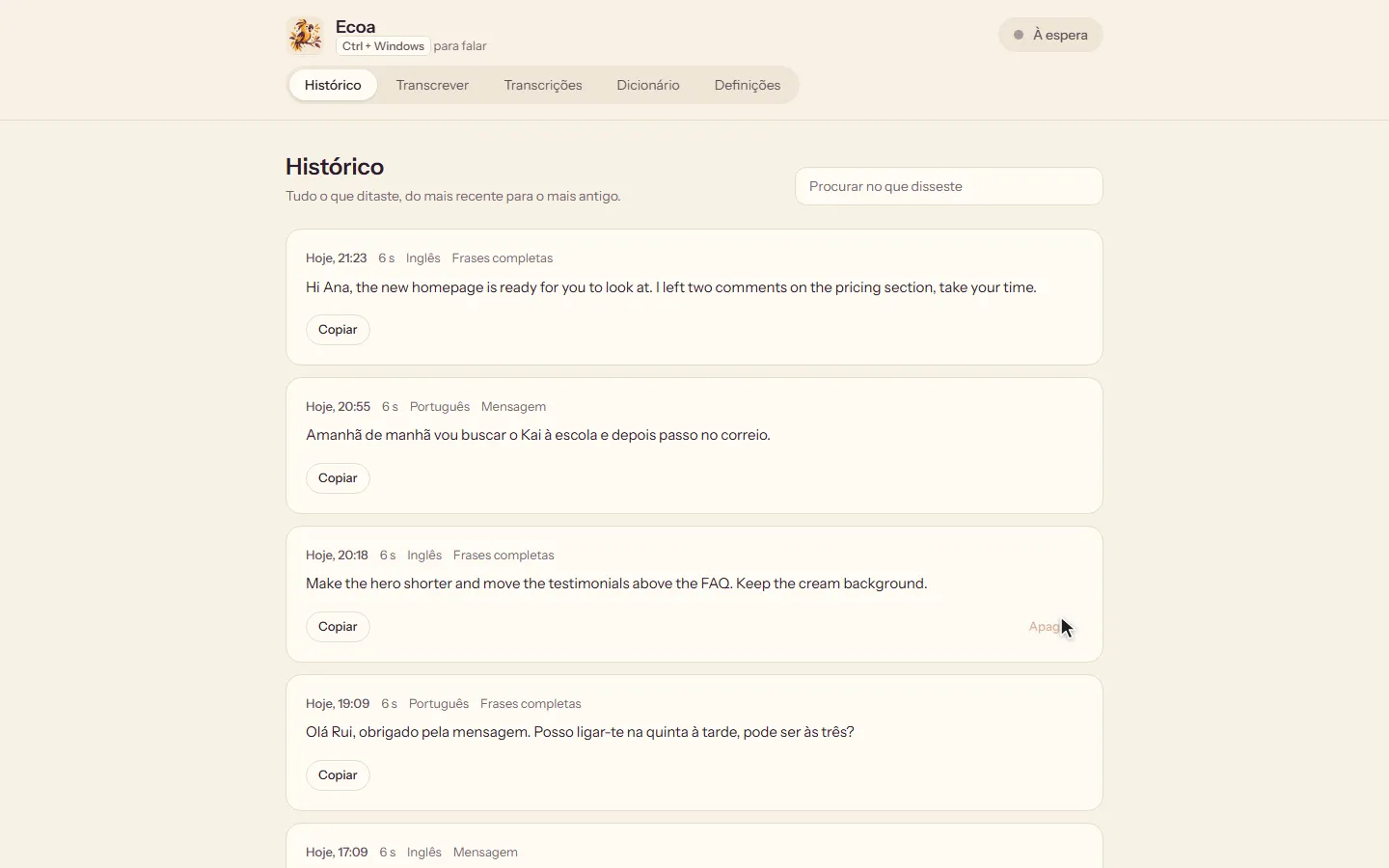 EcoaI speak, and the text appearsIn place of Wispr Flow and Granola
Then I built Ecoa. Think Wispr Flow and Granola in one: I press a shortcut, speak, and the text appears wherever my cursor is. It also transcribes calls, courses and voice notes, with a summary and notes, and there is no limit of 2,000 words a week. It runs on Groq’s API, which has a free tier anyone can use.
I say this because anyone can do this now. Give Claude the right context and the right direction, and you can build the personal tool that makes your day lighter.
What changed in my work
Back when I built everything in Webflow, working on three sites at the same time was impossible, and closing five projects in the same week even more so.
Now the technical part is lighter, and the boring part, the organisation, is sped up by AI. My own tools show me what I can take on at the same time, and what is coming next.
That leaves room for what actually makes a website good.
Hours of conversation before any design
Before I design anything, I talk to the client. Sometimes for two hours, sometimes four, sometimes six.
We go through the essential copywriting and website strategy questions. What makes you unique? Who is the person landing on your site, and what do they want? What do you want them to feel when they arrive?
I put myself in the shoes of their clients, to understand what is really possible and what they really want.
Everything from those hours goes into the files I give Claude before any design. The more complete the brief, the fewer small changes later. It comes back with three visual directions, three different openings for the homepage, and all three are already close to the essence of the project. Then comes constant feedback, and in a few days we have something precise.
Yes, the site is built with AI, and what makes it unique is that it matches the essence of the person, their business and their clients.
AI builds. Discernment decides.
With a problem solving mindset, almost everything is possible now. So the question changes from “can I do this?” to “should I?”
The work is deciding between this path and that one, based on what the client told me and on what their clients will want. The AI’s advice is one voice in that decision, and it doesn’t get the last word.
It also takes a designer’s eye. Claude loves to add: colours nobody asked for, an H6 above the H1, then an H2, an H3, another H6, more text below, and icons everywhere.
What comes back
After I take things away
A lot of my work is looking at what Claude made and taking things away, until it is simple and quiet enough for the person it was made for.
The long road here
It took me a long time to get here, to the point where clients come to me and I don’t have to reach out to them.
Becoming a father made me grow, more mature and more responsible. It taught me to value myself more, and made me even more empathetic.
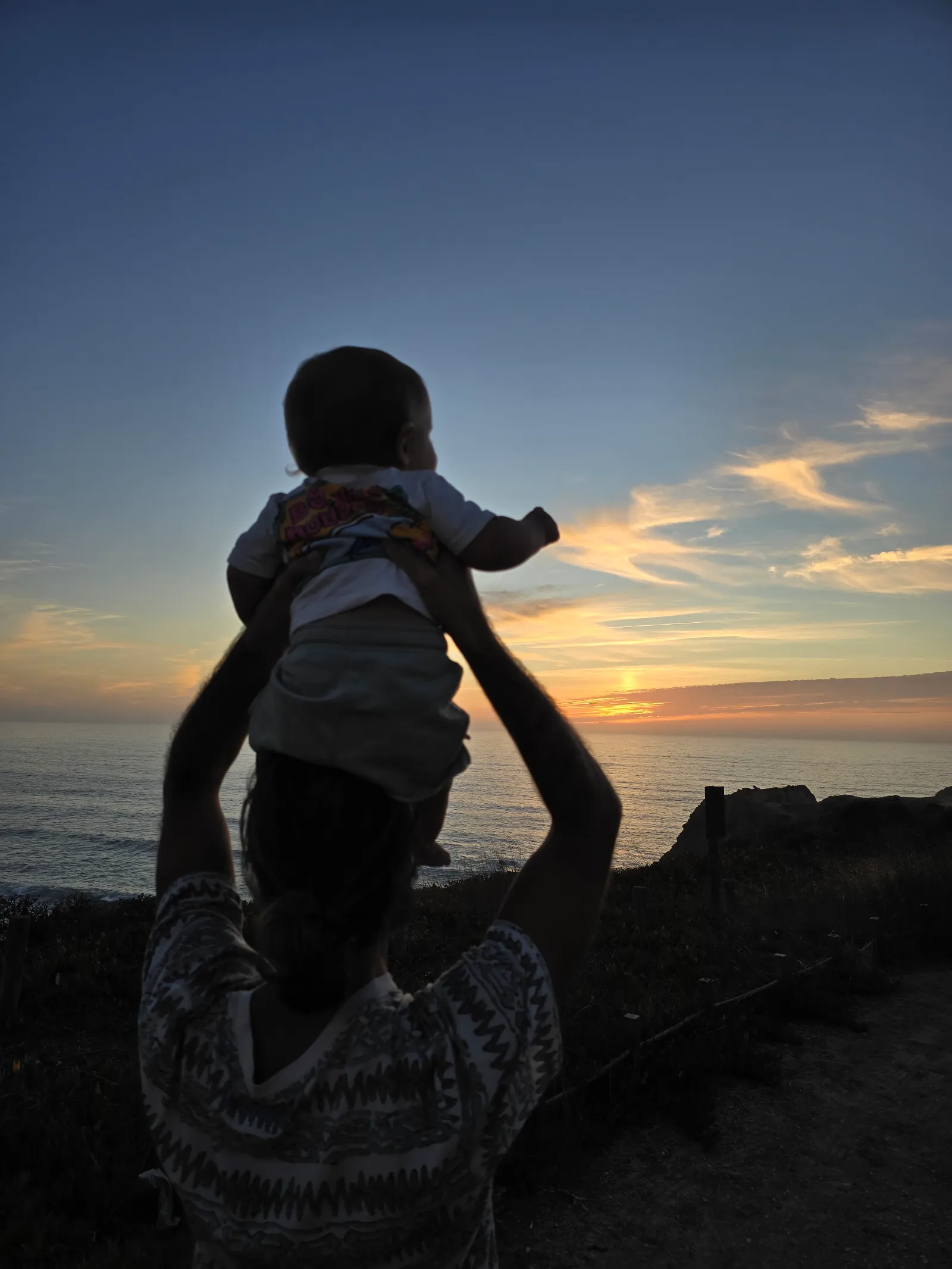
Even when money isn’t abundant, faith has to be strong. You have to believe this is the path, and that abundance will come. In the hard times it is easy to give up and look for a job that has nothing to do with my purpose, and it would have been easier to just go back to coding. Would I feel fulfilled? Of course not.
A bridge
Last week I closed six projects.
Part of it is flexibility with payment. Sometimes I take a bit more risk on my side, and sometimes part of the payment is a massage, a cacao ceremony, whatever service they offer. The wellness world is open to that, and so am I. You have to be flexible, know how to communicate, and feel the niche.
And I know this niche from the inside. I go to family friendly festivals and cacao ceremonies, I do yoga and I meditate.
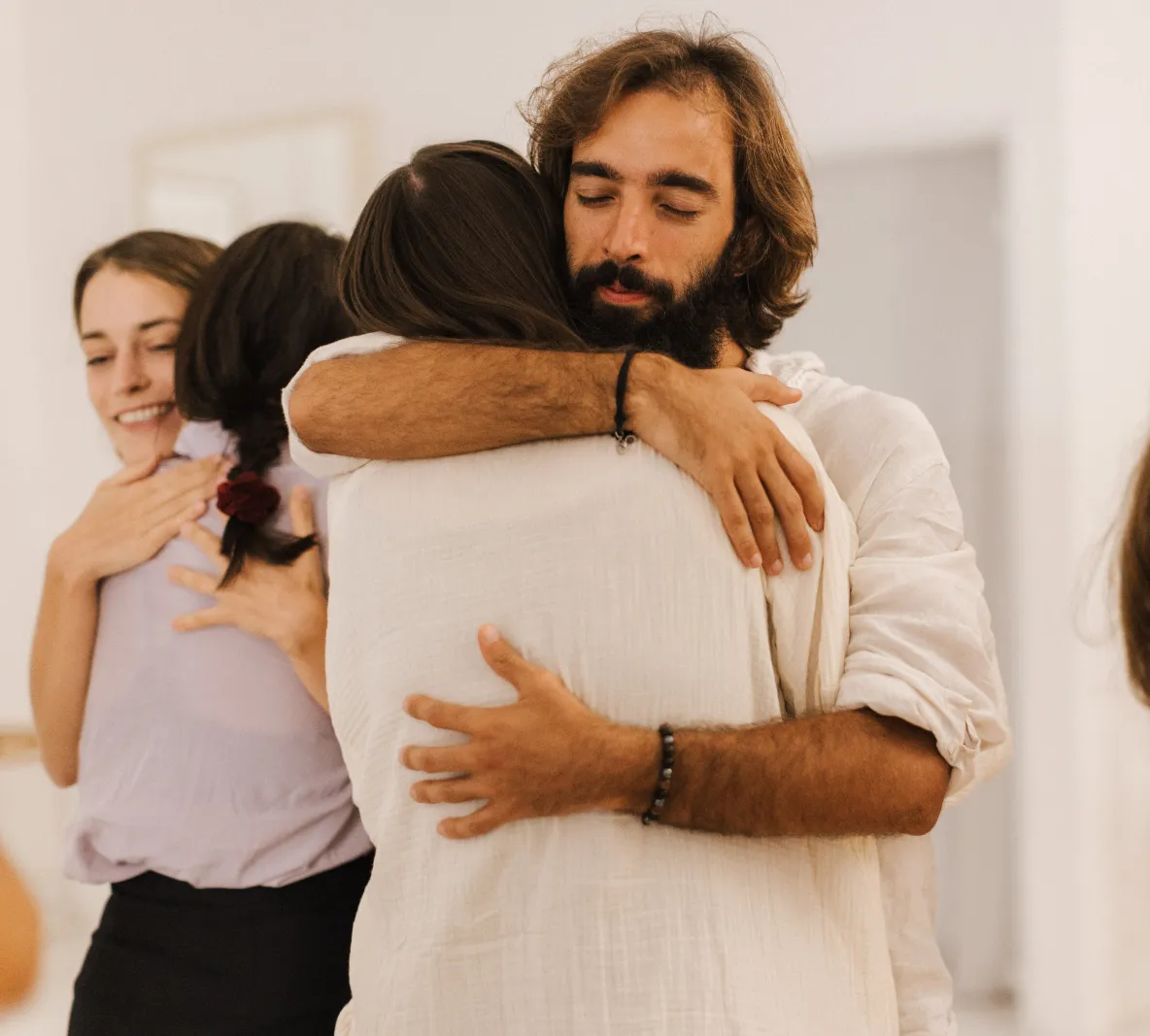
So I became a bridge. On one side, everything I know about design and development. On the other, people on the same frequency of love and calm, who feel drained just thinking about building a website.
Why not just use Lovable?
I see many people trying it alone on Lovable, for months on the five free daily credits, or paying for more. And in the end there is a generic site that isn’t ready, with weak SEO and a slow page.
A website has one job. To be found, on Google or on ChatGPT, and to be something you are proud to send to your people. Someone lands on it and in three seconds feels: yes, this is what I was looking for, a story I connect with.
A quick landing page just because? You might as well not build anything.
If you feel drained just thinking about your website, let’s talk.
Tell me what you do and where you are stuck. I will answer myself, and you will have nothing to decide yet.